Storm damage roof repair, documented for your insurance claim
Hail bruising, wind-lifted shingles and impact punctures are usually covered by your homeowner policy — but only if the damage is documented properly and reported in time. Our screened partners inspect, photograph and measure the damage, then quote the repair.
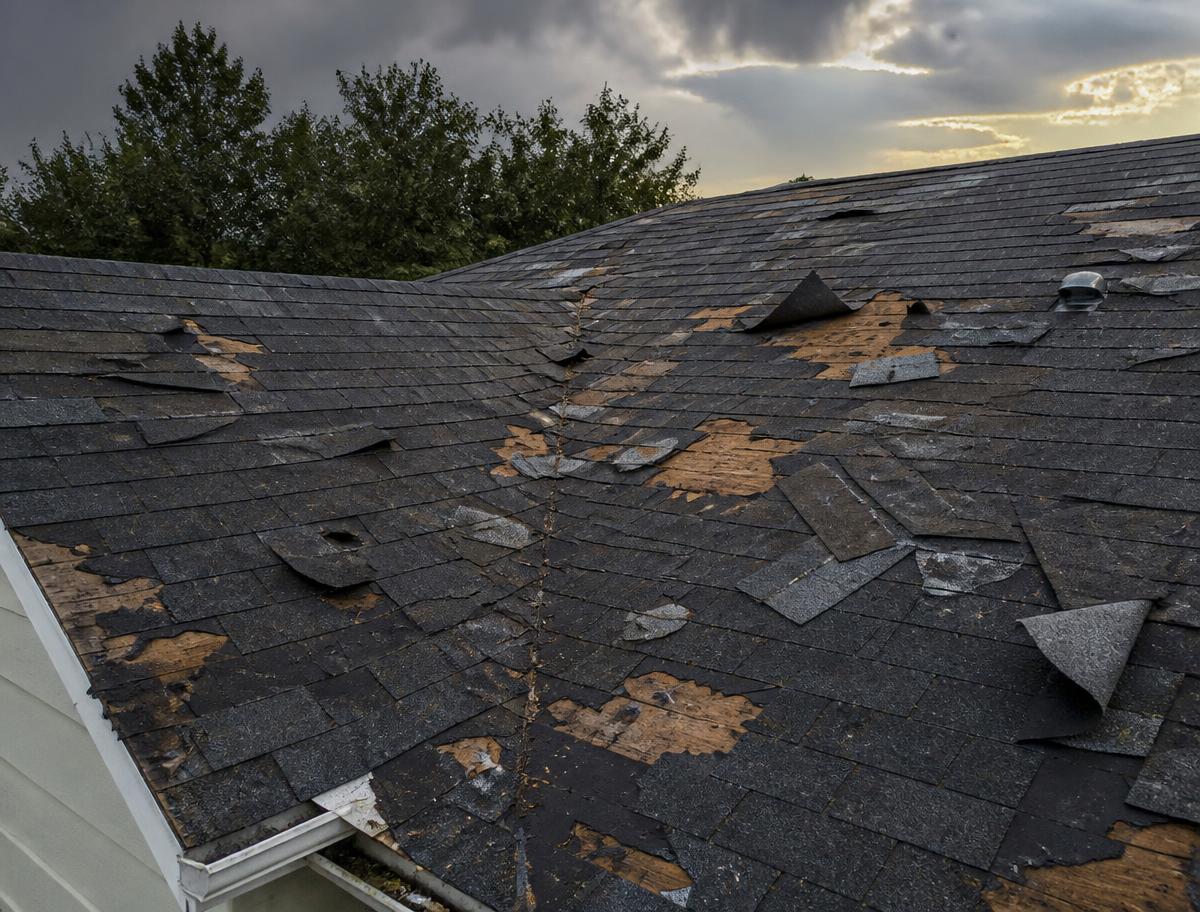
Warning signs
What to look for
- Granules in gutters and downspouts
- Heavy granule loss after hail means the shingle mat is exposed and aging fast, even when the roof looks intact from the ground.
- Dented soft metals
- Dents in gutters, vents, flashing or your AC condenser are the clearest evidence an adjuster looks for that hail actually hit your property.
- Lifted, creased or missing shingles
- Wind breaks the sealant strip. Creased shingles keep sealing and unsealing until water gets underneath.
- Debris and limb strikes
- Impact points crack decking and puncture underlayment. Damage is often invisible from inside until it rains hard.
Scope of work
What's included
- Full exterior storm inspection with dated photo documentation
- Hail test squares and wind-damage mapping across each roof slope
- Soft-metal and collateral damage assessment (gutters, vents, siding)
- Emergency tarping to stop active water intrusion
- Itemized repair or replacement estimate in claim-ready format
- Support meeting your adjuster on-site and reviewing the scope
- Shingle matching or full-slope replacement where matching fails
Typical storm repair range
$500 – $3,500
Localized storm repairs commonly land in this range before insurance. Widespread hail damage across multiple slopes usually becomes a full replacement claim, where your out-of-pocket cost is often limited to your deductible.
National averages shown for orientation only. Your itemized quote comes from an independent licensed contractor after an on-site inspection.
Questions
Storm Damage FAQ
How long do I have to file a storm damage claim?
Most US policies require prompt notice, and many carriers set a one-year window from the date of loss. Some states allow longer. File as soon as you suspect damage — delay is the most common reason claims get denied.
Will filing a claim raise my premium?
Weather claims are usually treated as non-fault catastrophe losses, so a single storm claim affects your rate differently than an at-fault liability claim. Rates in an entire hail region often rise regardless of whether you file.
Can a contractor waive my deductible?
No. Absorbing or rebating a deductible is insurance fraud and illegal in many states. Any contractor offering it is a warning sign, not a bargain.
What if my claim gets denied?
You can request a re-inspection, provide independent documentation, or invoke the appraisal clause in your policy. A detailed third-party inspection report is the strongest support for an appeal.
Should I sign anything before my claim is approved?
Never sign a contract with an open scope or an assignment of benefits you haven't read. Get an itemized estimate first and keep control of your claim.