Roof leak repair that fixes the source, not just the stain
Water rarely enters where it shows up inside. Most leaks start at flashing, valleys, penetrations or nail pops and travel along decking and rafters before dripping through drywall. Our partners trace the path first, then repair it.
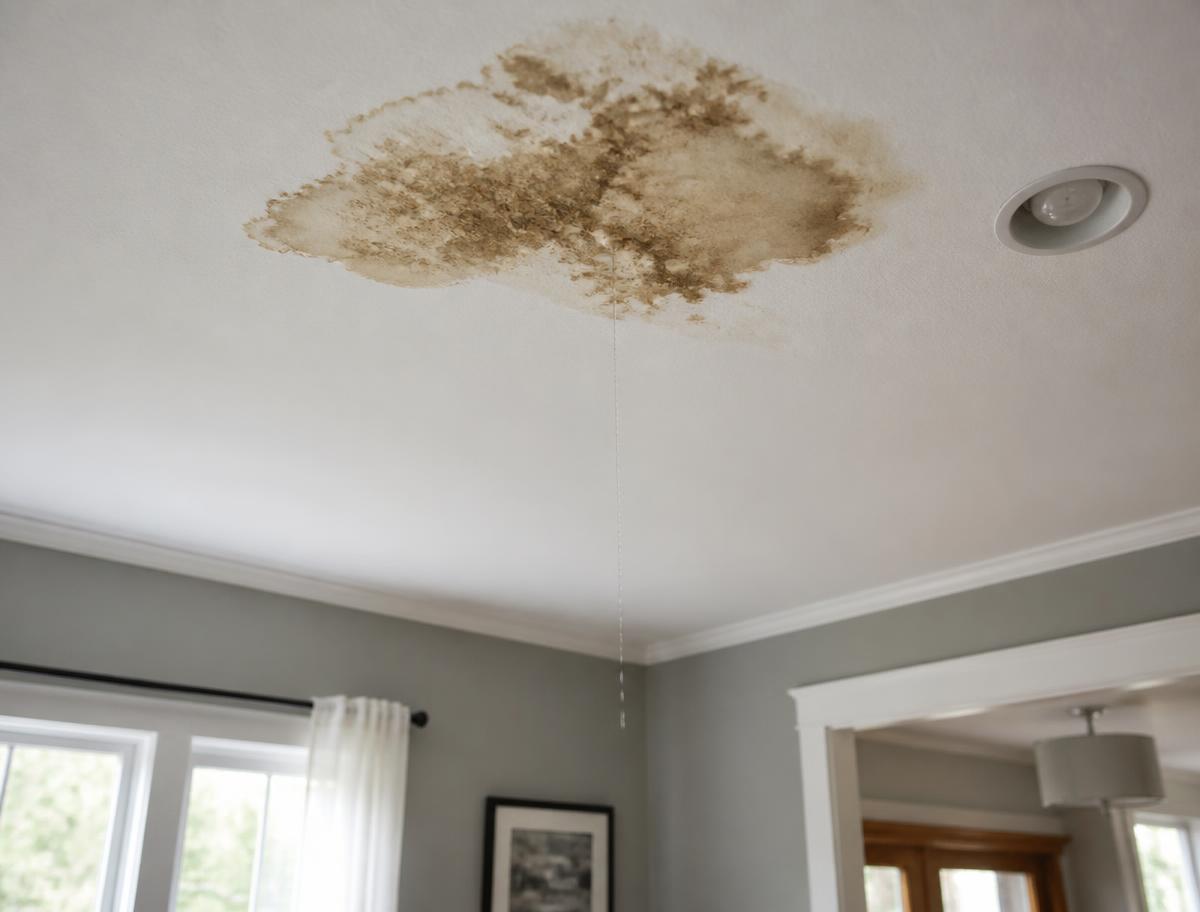
Warning signs
What to look for
- Ceiling or wall stains
- A brown ring that grows after rain means water has been sitting in the assembly long enough to saturate insulation.
- Musty smell in the attic
- Odor without a visible stain usually means slow, chronic moisture — the condition mold needs.
- Failed flashing and boots
- Chimneys, skylights, vent pipes and wall junctions cause the majority of leaks. Rubber pipe boots typically crack years before the shingles wear out.
- Ice dams and clogged valleys
- Backed-up meltwater and debris force water sideways and uphill, under shingles that shed rain perfectly well.
Scope of work
What's included
- Interior and attic inspection to trace the water path to its entry point
- Moisture readings on decking, insulation and framing
- Flashing, valley, skylight and pipe-boot evaluation
- Same-day emergency tarping for active leaks
- Targeted repair with matching materials and new underlayment
- Decking replacement where sheathing is soft or delaminated
- Written report noting whether repair or replacement is the better value
Typical leak repair range
$400 – $1,800
Straightforward flashing, boot and shingle repairs land in this range. Costs rise when rotted decking, structural framing or interior drywall and insulation must be replaced.
National averages shown for orientation only. Your itemized quote comes from an independent licensed contractor after an on-site inspection.
Questions
Roof Leaks FAQ
How urgent is a small roof leak?
More urgent than it looks. Wet insulation loses R-value permanently, and mold can establish within 24 to 48 hours. A $600 repair becomes a five-figure remediation project if it sits for a season.
What should I do right now if water is coming in?
Move belongings, put a bucket down, and if a ceiling is bulging, pierce the low point with a small hole to drain it in a controlled way. Photograph everything for your insurer, then get an inspection booked.
Does homeowners insurance cover roof leaks?
Sudden leaks caused by a covered event like a storm are typically covered, including resulting interior damage. Leaks from age, wear or deferred maintenance are generally excluded.
Why did my previous leak repair fail?
Almost always because the entry point was never found. Sealant smeared over a stain hides the symptom for one season. Correct repairs replace flashing and underlayment so water is shed, not dammed.
Can leaks be repaired in winter?
Yes. Emergency stabilization and most flashing work can be done cold, though some sealants and shingle sealing strips need warmer weather to fully bond and may be revisited in spring.